
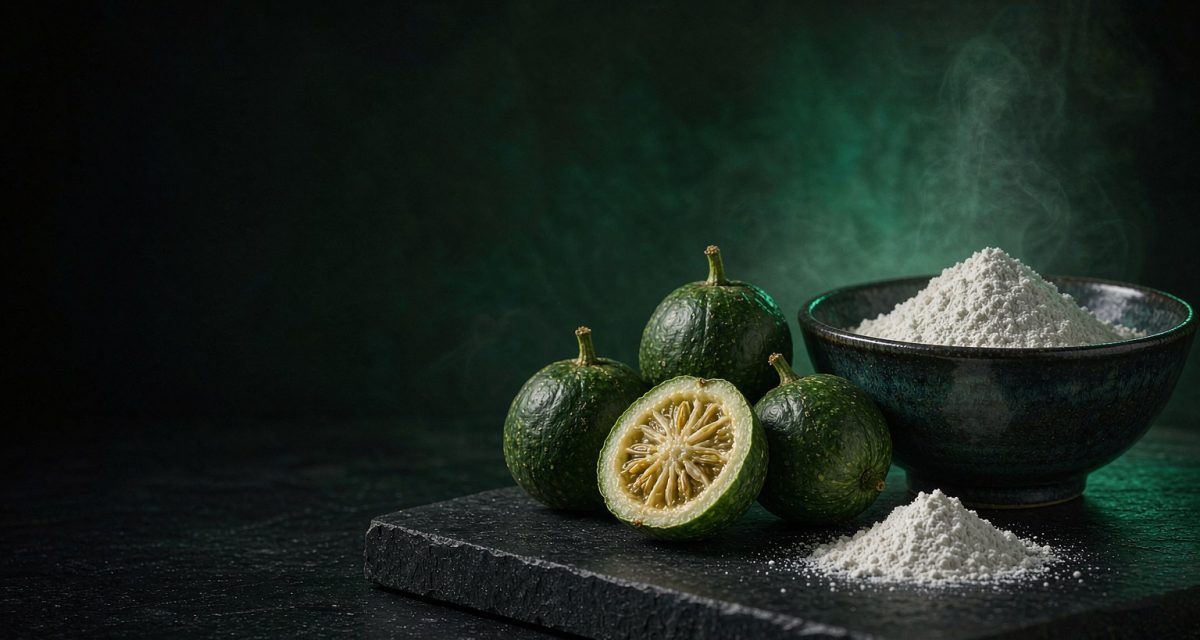
The past two years have reshaped the sweetener landscape. More than fifty jurisdictions now tax sugary drinks, retailers are enforcing sugar targets on their own shelves, and shoppers have learned to read the Added Sugars line on a nutrition panel. Against that backdrop artificial high-intensity sweeteners have lost ground, and plant-derived extracts have taken the share.
Why monk fruit specifically
Among the natural options, monk fruit extract stands out on taste fidelity. Older stevia generations carry a recognisable licorice and metallic linger that formulators spend months trying to mask. Mogroside V presents an immediate, rounded sweetness that decays cleanly, which is why beverage developers who once specified stevia alone now specify a monk fruit and stevia blend. It is also thermostable to 200 °C and pH-stable across the full range of carbonated and acidic drink bases.
What changed on the supply side
Monk fruit was historically the volatile ingredient in the basket — a bad harvest in Guangxi moved global prices overnight. Investment in plantation management and standardised fruit grading has materially reduced that. In 2026 we are able to quote quarterly price locks for contract volumes, which was difficult to promise even three years ago.
Where growth is actually coming from
The largest volume increases are not in beverages but in categories where formulators previously had no workable natural option: protein and meal-replacement powders, functional gummies, sugar-free bakery and no-added-sugar confectionery. Monk fruit supplies the taste; allulose or erythritol supplies the bulk and the browning. Sold as a co-blend, that combination is now the most requested product format we ship.
What this means for procurement
Three practical consequences follow. First, specification against a single grade is increasingly inefficient — buying across a grade ladder lets you trade intensity against cost per application. Second, documentation capability separates suppliers more than price does; a customs hold costs far more than a 3% ingredient differential. Third, qualifying a second source is prudent while supply is stable and terms are favourable, not after a disruption.